Posted by João Martins on 13 Apr 2026
How to Submit a Form to Google Sheets on GitHub Pages
Add a working contact form to your GitHub Pages site - no backend needed
GitHub Pages is great for hosting static sites for free, but it doesn't support server-side code. That means you can't process forms natively. Form2Sheet solves this problem - just point your HTML form to our API and submissions go straight to Google Sheets.
In this tutorial, I will guide you through the process of adding a contact form to your GitHub Pages site using Form2Sheet, making your data collection journey smooth and efficient.
Step 1: Prerequisites
The first step in integrating Form2Sheet is to subscribe either monthly or yearly.
Then, go to https://form2sheet.com and create your first
spreadsheet.
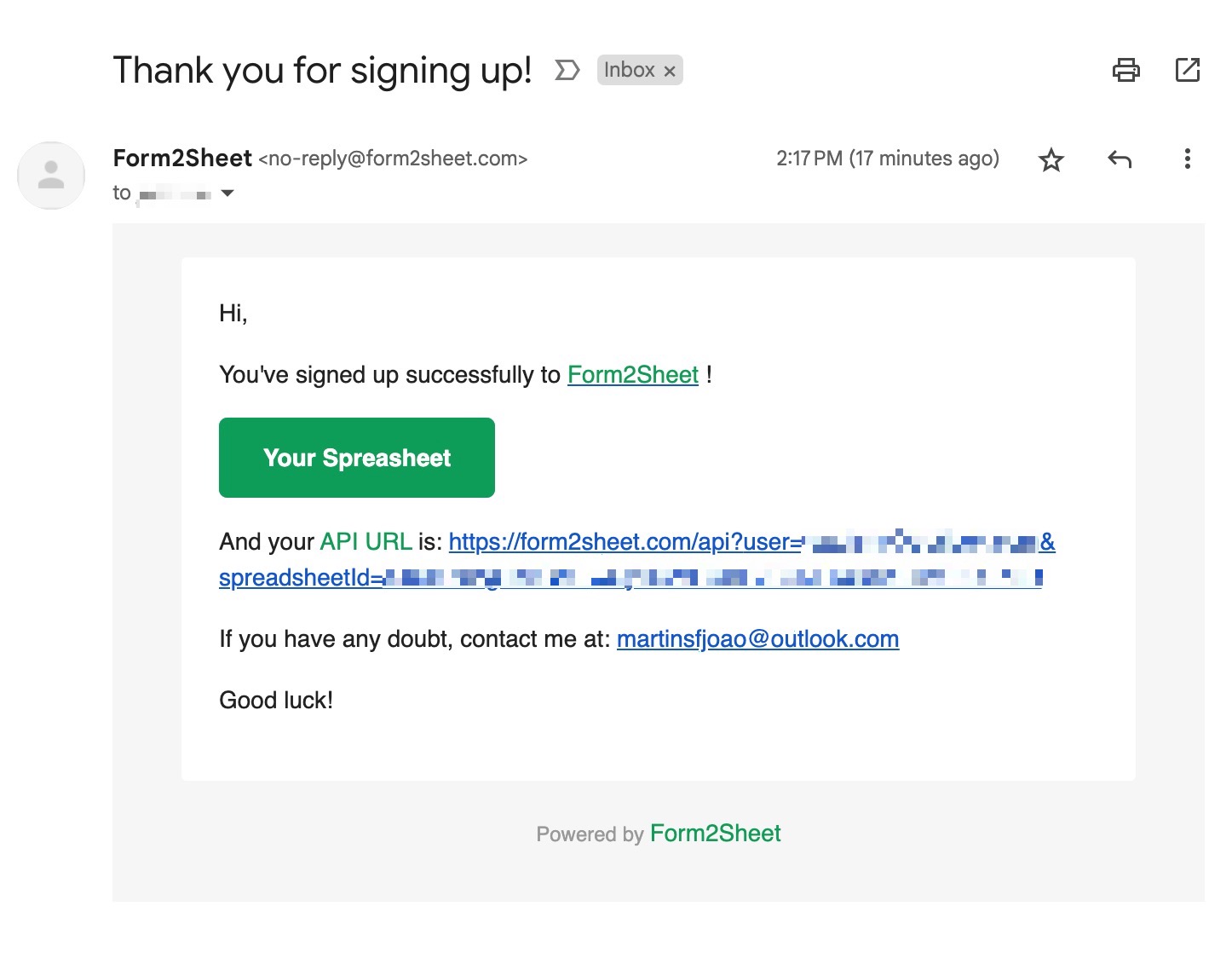
(Email received after creating a spreadsheet)
Step 2: Building Your GitHub Pages Contact Form
This is the beauty of Form2Sheet on GitHub Pages - a plain HTML form is all you need. No Jekyll plugins, no JavaScript, no server. Make sure to replace the $API_URL with the one you received
in your email (check your spam folder as well).
<form action="" method="">
<label>Name:</label>
<input type="text" name="" />
<label>E-mail:</label>
<input type="email" name="" />
<label>Message:</label>
<textarea name=""></textarea>
<input type="submit" value="Submit" />
</form>
Step 3: Submitting the Form
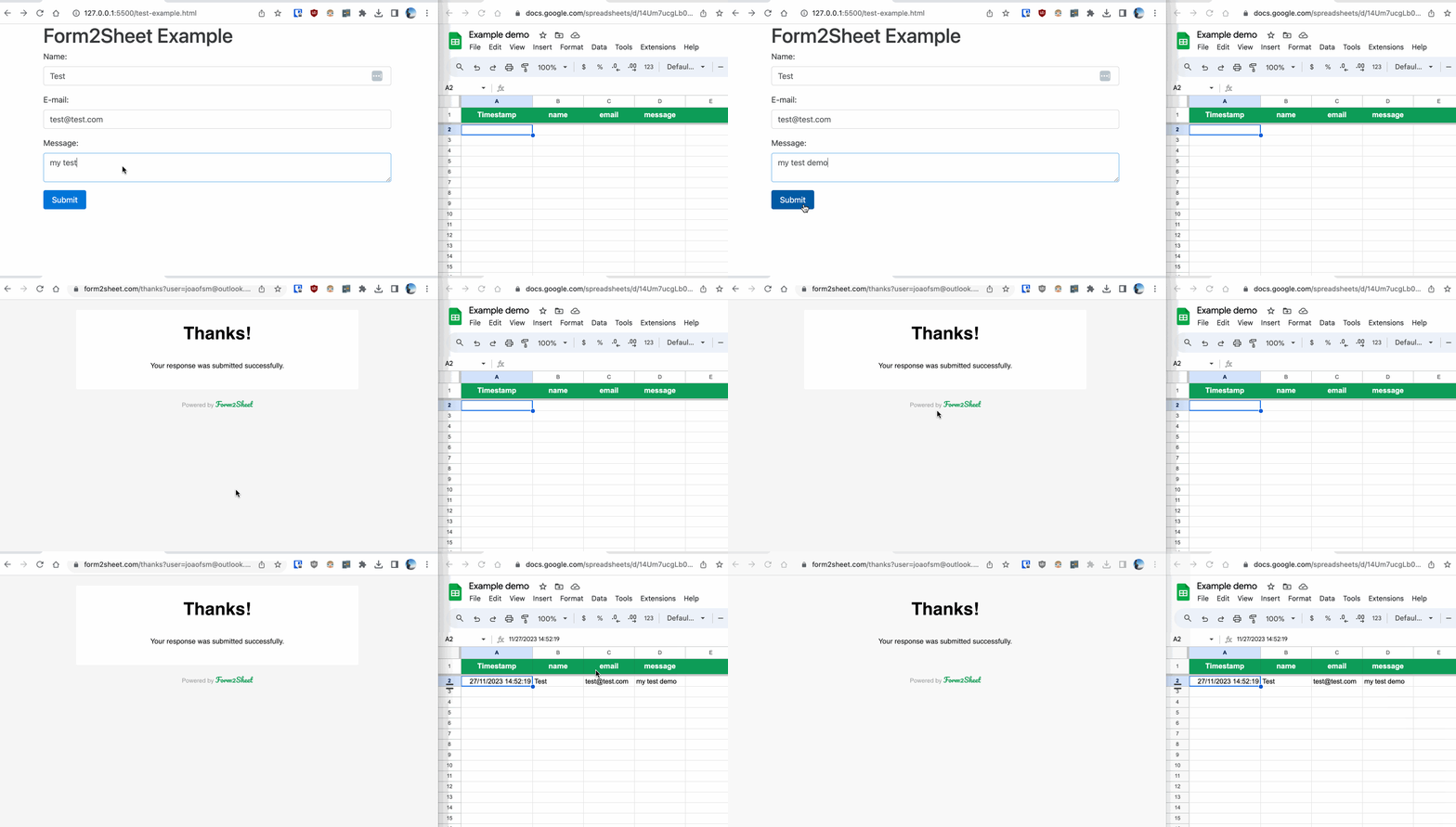
In the GIF below, you can see how after submitting the form you check the results in
your Spreadsheet.
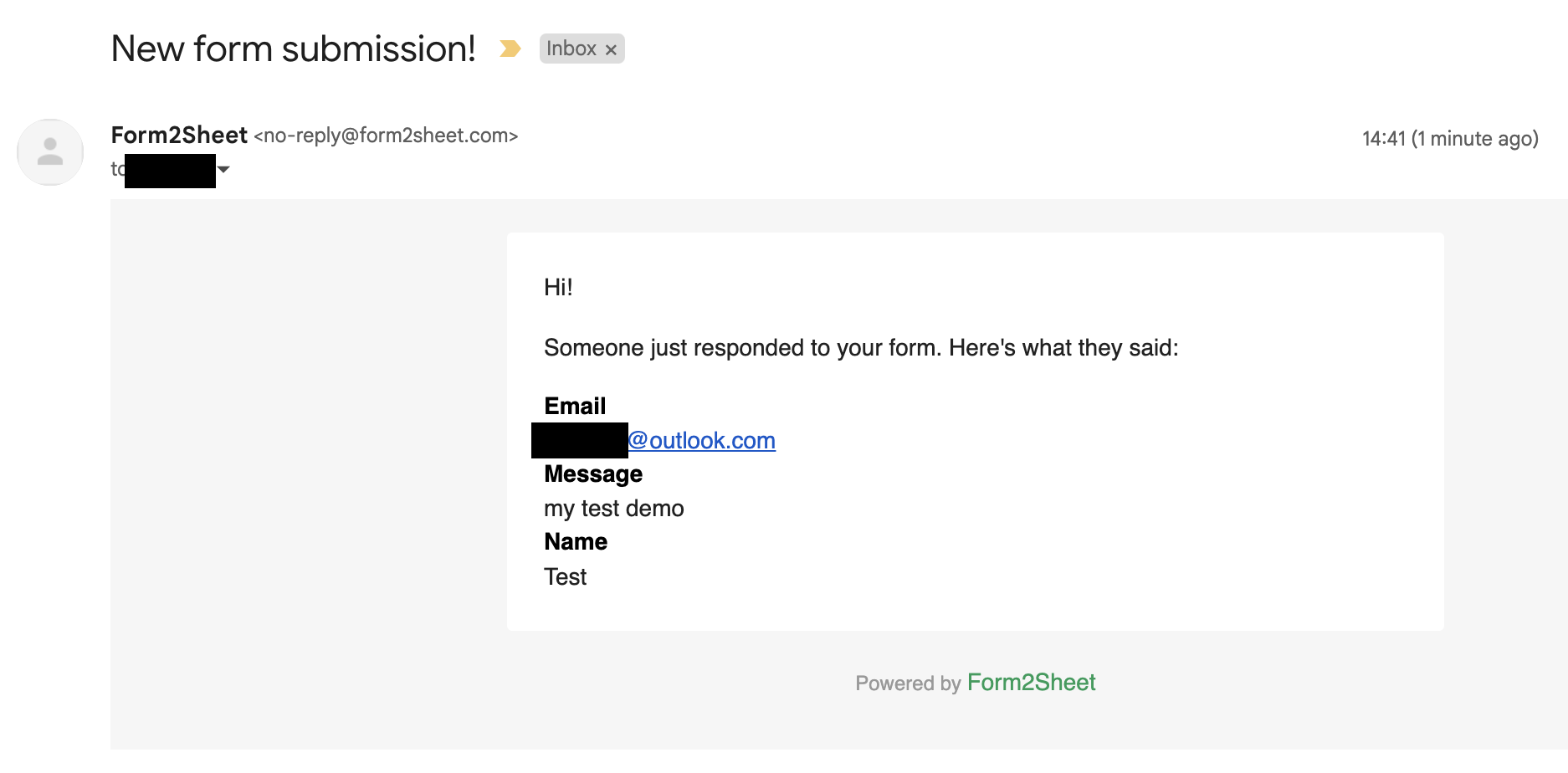
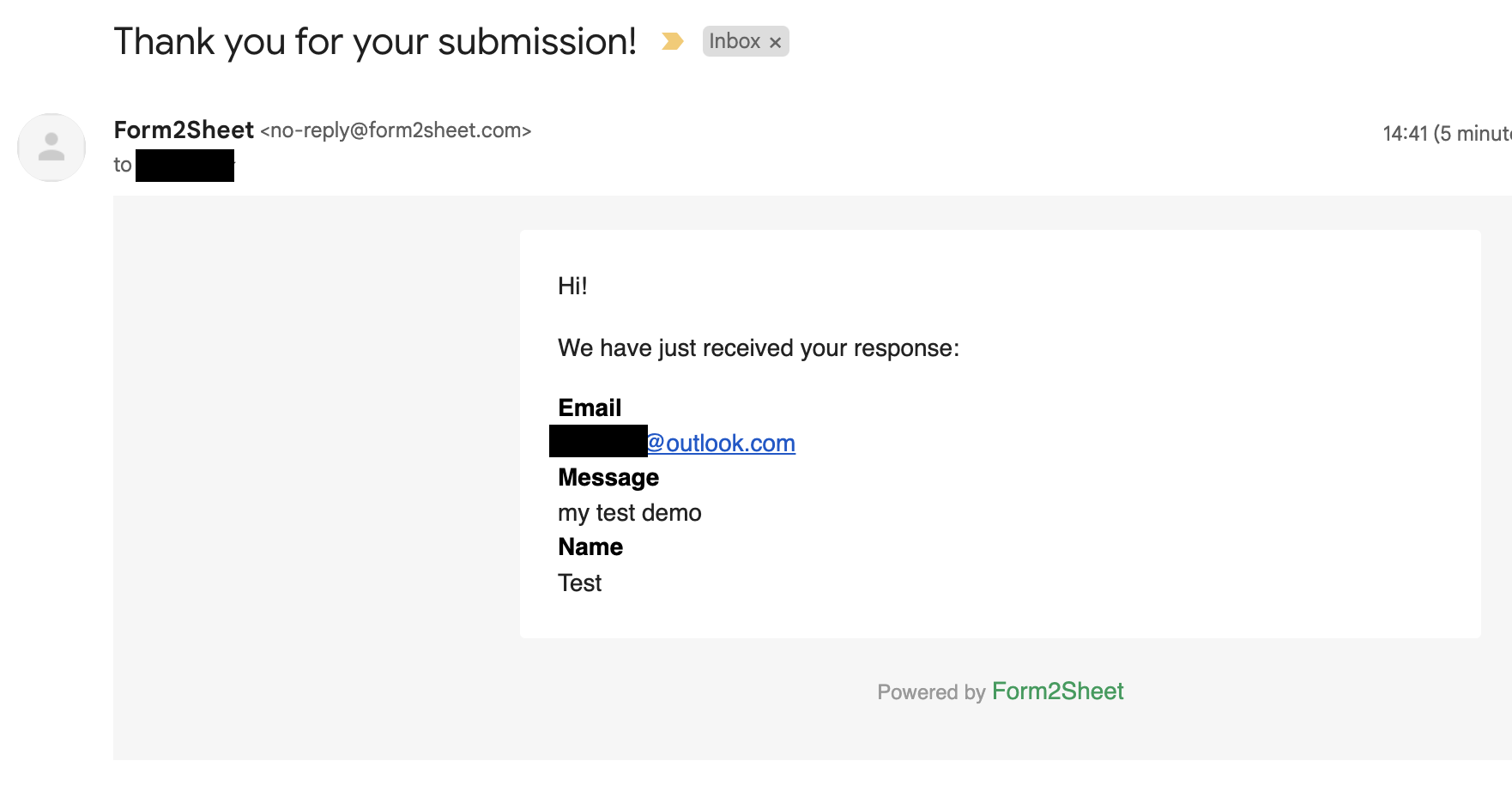
Besides that, you and the respondent will receive a confirmation email with the data
submitted.
And that's is! Simple as that. Aditionally, you can create Unlimited Spreadsheets, customize the Thank You page, add as many Custom Form Fields as you want and remove the Form2Sheet branding from the emails.

Conclusion
Congratulations! You can now go ahead and publish your GitHub Pages contact form. It is now
ready to start collecting responses. With
Form2Sheet, the process is streamlined, and you can focus on obtaining valuable data
without
the hassle of complicated setups.
If this made you curious, go ahead and check our pricing below.
Related Guides
Explore our other tutorials for different platforms and frameworks: